
CLS Alumni Highlight: Sam Bowden
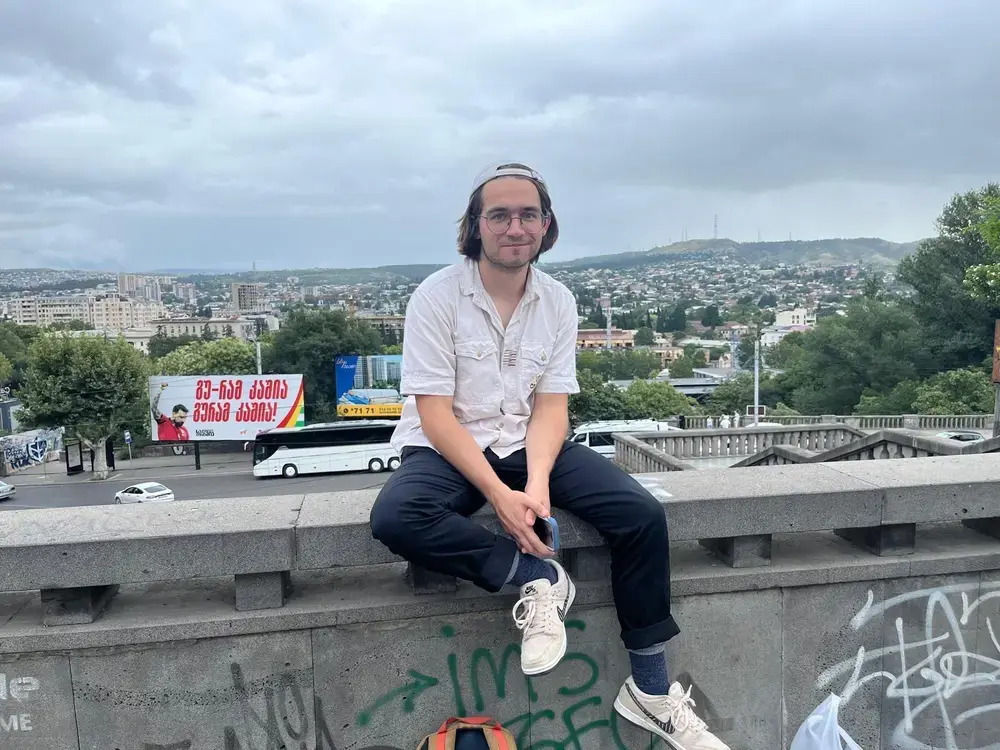
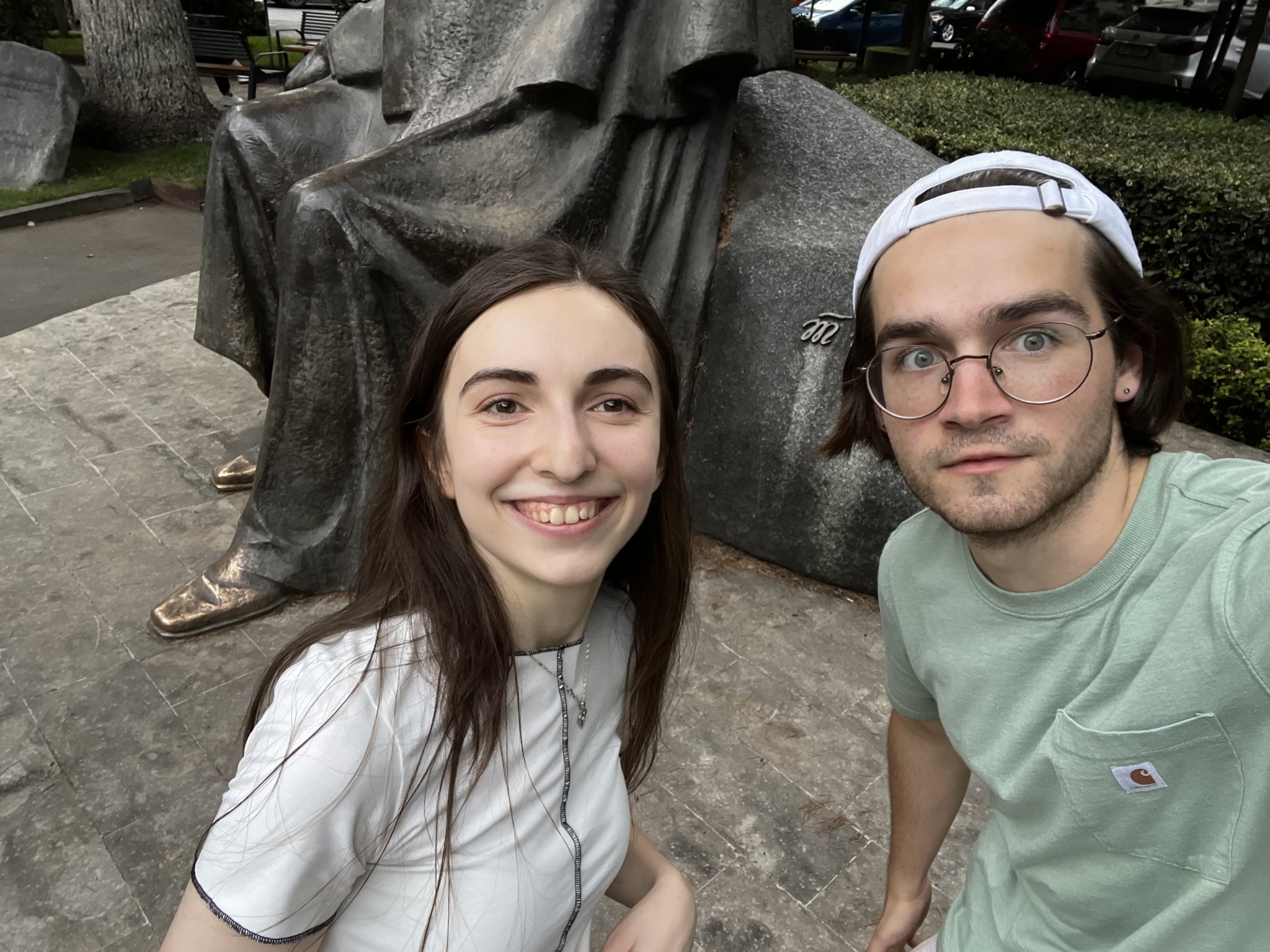
Sam Bowden, a 2024 CLS Russian Program participant in Tbilisi, Georgia, leveraged his personal and academic interests in Russian language, literature, and geopolitics to build meaningful international connections and launch a career in foreign policy. His experiences with CLS helped bridge the gap between academia and professional work, ultimately leading to his selection as a Marshall Scholar in 2026. In this interview with Communications Officer Josie Krieger Sam reflects on the impact of CLS, his academic journey, and offers advice for students pursuing similar opportunities.
Josie Krieger: How did your CLS experience shape your academic or career trajectory?
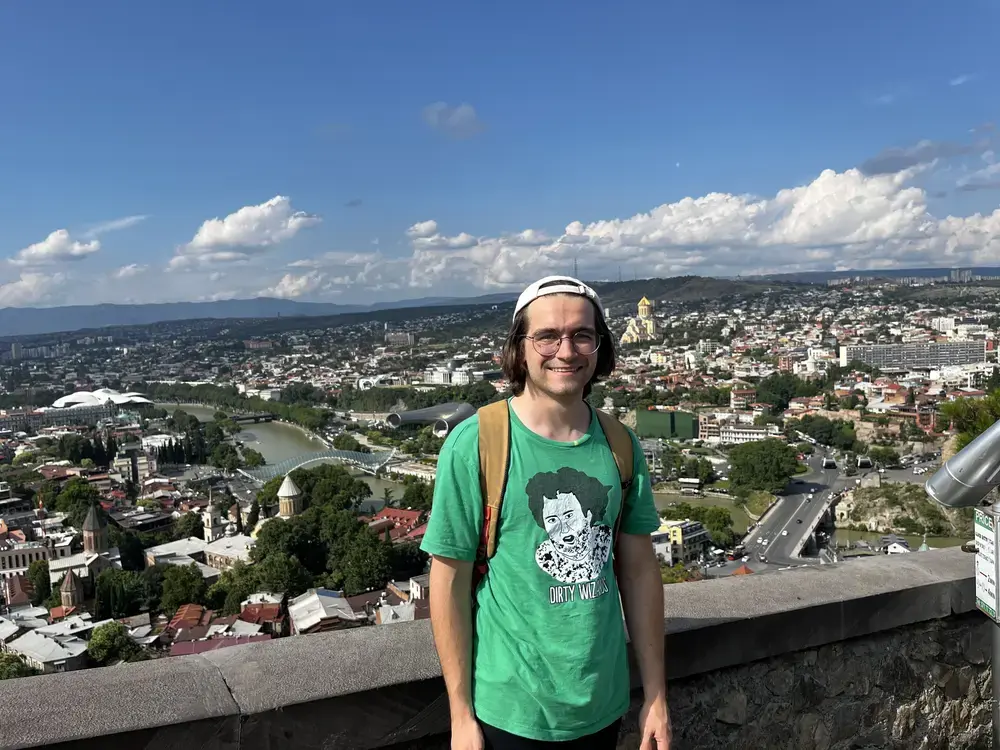
Sam Bowden: I did CLS the summer after I graduated from my undergraduate degree. It was really the transition period from academia to doing my work in foreign policy. My first job after CLS was at the Carnegie Endowment for International Peace, a big think tank in Washington, D.C. There, I was a Junior Research Fellow for their Russian Department. CLS was perfect in making that transition from being in the purely academic setting in college (locking up in the library and getting the language down), to studying abroad (living the language in an unfamiliar setting), to then working (analyzing everything in modern political context). CLS created a steppingstone between academia and fast paced foreign policy because it allowed me to spend time on the ground, in places where these issues are actively being played out.
I noticed a lot of things in Tbilisi that impacted my understanding of the geopolitical situation in eastern Europe in general. CLS gave me lived experiences that were very useful for me when I returned and began working in the foreign policy world.
JK: What skills, perspectives, or language abilities from CLS have been most valuable—whether in your application or your broader goals?
SB: I got a lot better at applying for things through CLS.
I actually applied to CLS my first or second year of college and was rejected. I really worked my butt off for that application, and it didn't make it through. Then, I applied again and I got it. The process of applying to CLS was very useful, and that did inevitably serve me well for the Marshall Scholarship.
One of the things that matters a lot to the Marshall program, and to me, is the notion of ambassadorship—the interface between communities. And one of the things I really relished in Tbilisi was being able to build a lot of interesting relationships with people from very different contexts when I knew that we had a shared goal or set of interests.
For example, at the same time I started living in Tbilisi, I also started a job as a fiction editor at a literary magazine called Asymptote. Asymptote focuses on translated literature, and it specifically is looking for underrepresented languages that aren't usually translated into English. I got to get in touch with a lot of Georgian writers and translators while I was living in Tbilisi. I would meet up with them in cafes and at literary readings and speak to them and figure out how to get their writing delivered in English for the first time. I'm still in touch with some of these people, even a year later.
CLS taught me how to be an ambassador, and it taught me that ambassadorship is something that rests on a notion of shared base passion or interest, if not necessarily shared exact background. I knew that the people I was talking to just liked reading good stories, and I like reading good stories. So, I said, let's figure out how to collaborate, even if your English isn't so good and my Georgian is even worse. Let's see what we can do here. Being able to create these relationships based off that single core was insightful and gave me a very useful framework to discuss what I would do in the UK as an American via the Marshall Scholarship.
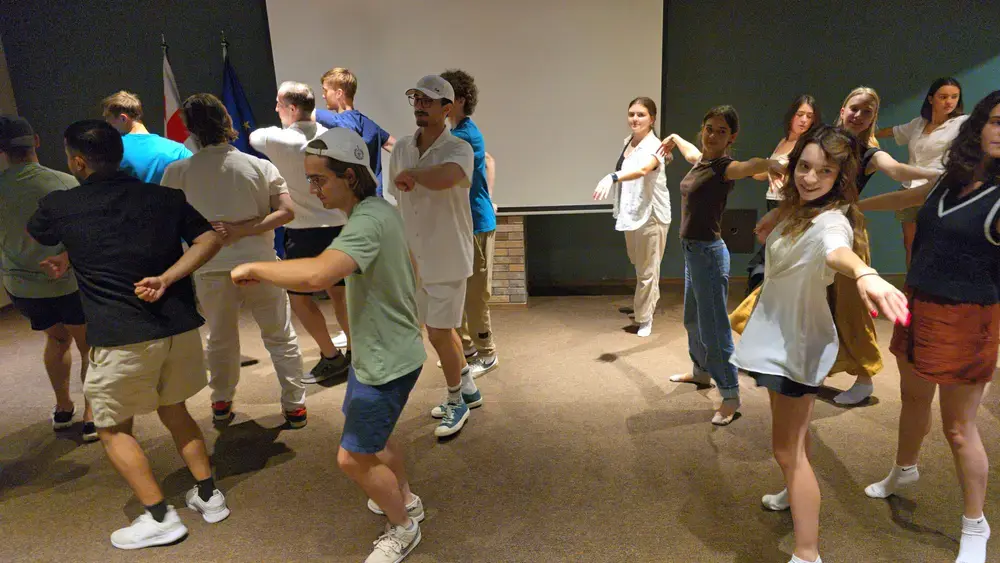
The program did a good job drawing together people from different backgrounds and who had come to this language for all sorts of different reasons. I came from Kenyon College, a small liberal arts college, while some of my peers were from the ROTC programs at much larger schools. Perhaps through shared adversity, we were able to forge authentic relationships despite our differences.
JK: What inspired you to study Russian and participate in the CLS Program?
SB: There are a couple of moments that really solidified my interests.
One of the big moments for me, when I really started taking Russian seriously, was when I became interested in my family's history. I started speaking with my family members who explained that some of the best resources we have, and, in some cases, the only resources we have to understand my family's history, are Russian language imperial census materials. My family is from Russian-occupied Poland, and we came over to the United States about 100 years ago, right at the tail end of the Russian Revolution. My ancestors didn't keep many records in Poland, and they might have been illiterate. The only way that you can tell who was born and where they lived 100 years ago is to be able to read the imperial language.
The notion that my family had to be defined by a language that wasn’t their own was very compelling to me. The fact that I had to engage with the language to understand a culture that felt deeply personal to me—while realizing that learning it often required moving away from that culture and toward the imperial center—was deeply fascinating.
JK: What are your long-term goals?
SB: I could see myself in a PhD program, although the notion of what that PhD would be is kind of on the flippy floppy side. I currently gravitate towards Comparative Literature because it is a fundamentally very interdisciplinary field that would allow me to approach these ideas in a unique format. I could also see myself ending up back in the policy space and doing research or think tank adjacent work. I could even see myself in journalism.
JK: What's your favorite memory from your time with CLS?
SB: The BBC has this amazing global news monitoring program, with global outlets that pull regional news and broadcast it back to the English language world. The BBC Russian news monitoring service is based in Tbilisi. Through a family connection, I was able to connect with staff and hang out with them for a day. I was able to see how these journalists were keeping tabs on Russia and decoding the Russian media, which ended up serving me quite well in my foreign policy job. The journalists gave me a lot of practical advice about how to monitor propaganda channels and to filter out the best information about domestic affairs in Russia as quickly as possible.
That was a really, really cool day.