
CLS Alumni Highlight: Lucas San Miguel
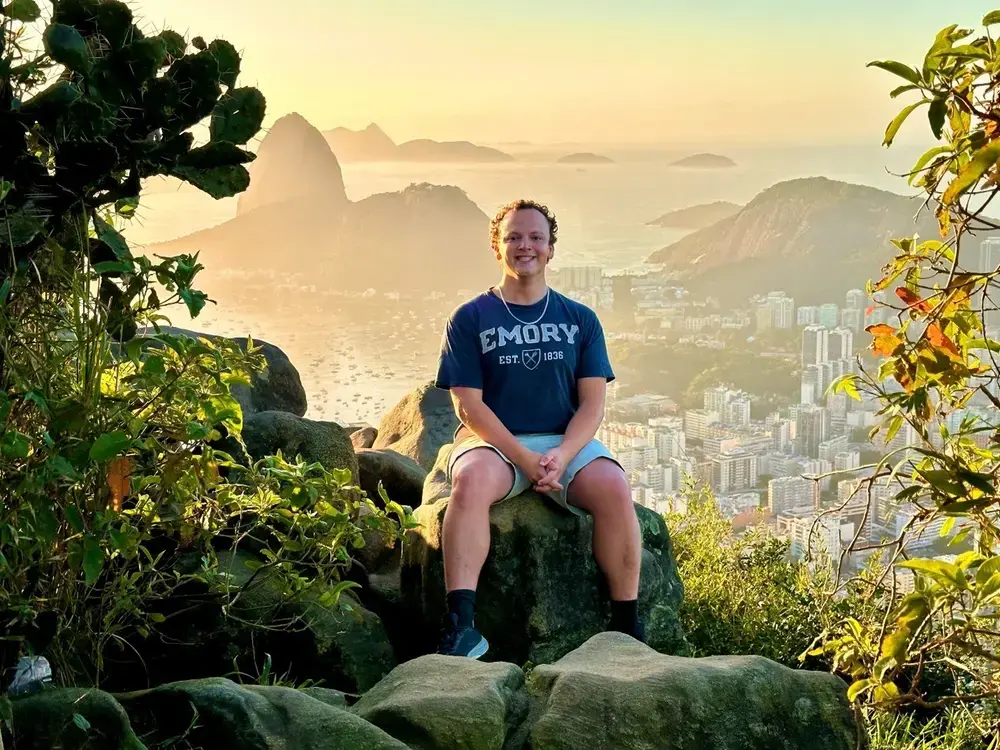
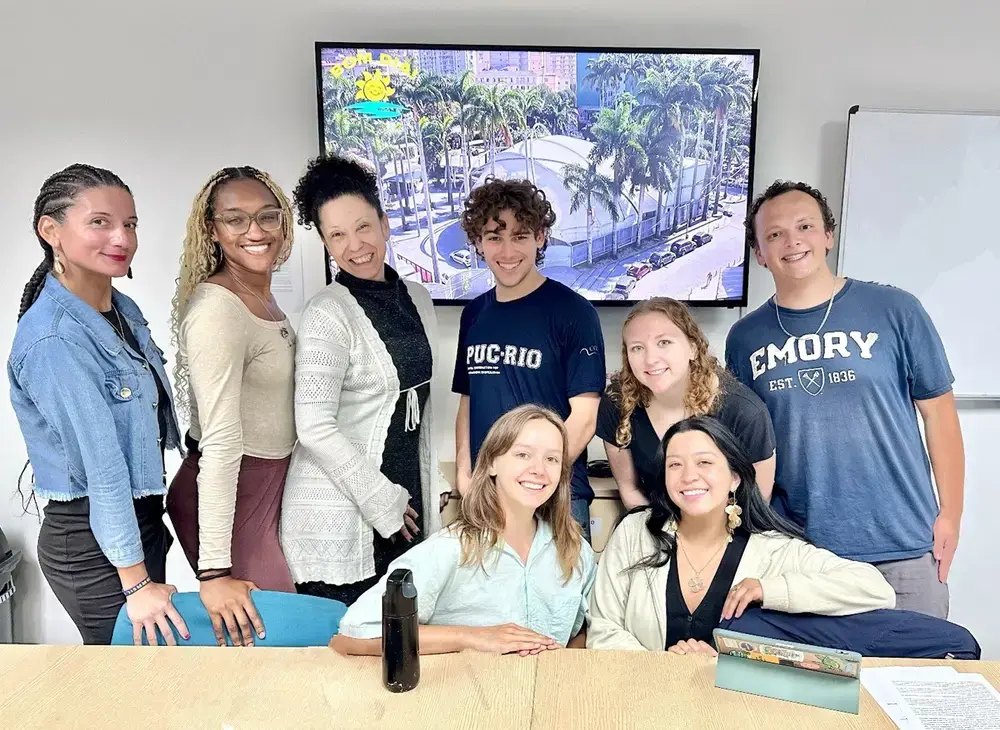
Lucas San Miguel’s journey with the CLS Program has come full circle. Four years after his first CLS experience as a college freshman studying Chinese virtually from Nicaragua, Lucas recently completed a second program—this time in Rio de Janeiro. Over several weeks, he balanced intensive Portuguese classes at the Pontifical Catholic University of Rio de Janeiro (PUC-Rio) with boardroom presentations at Coca-Cola’s South American headquarters. His experience unfolded against the backdrop of a pivotal moment in U.S.-Brazil relations: the BRICS summit, held just blocks from his host family’s home.
Driven by a passion for Latin American economic development, Lucas first pursued Chinese through CLS to better understand China’s growing influence in the region. That same interest led him to South America, where he is building Portuguese language skills and applying his academic background to real-world business challenges. In this conversation, Lucas reconnects with Senior Communications Officer Rori DiFiore to reflect on how CLS opened unexpected doors, the role of language in economics and business, and how his CLS Portuguese experience represents the culmination of years spent connecting language learning to his career aspirations in international development.
Lucas participated in the 2025 CLS Portuguese Program hosted by PUC-Rio in Rio de Janeiro, Brazil. He is a 2022 CLS Chinese alumnus and two-time NSLI-Y Chinese alumnus. Lucas graduated from Emory University with a double major in Economics and Chinese Studies. He was awarded the Bobby Jones scholarship and is currently pursuing a Master of Science in Global Sustainable Development at the University of St Andrews in the U.K.
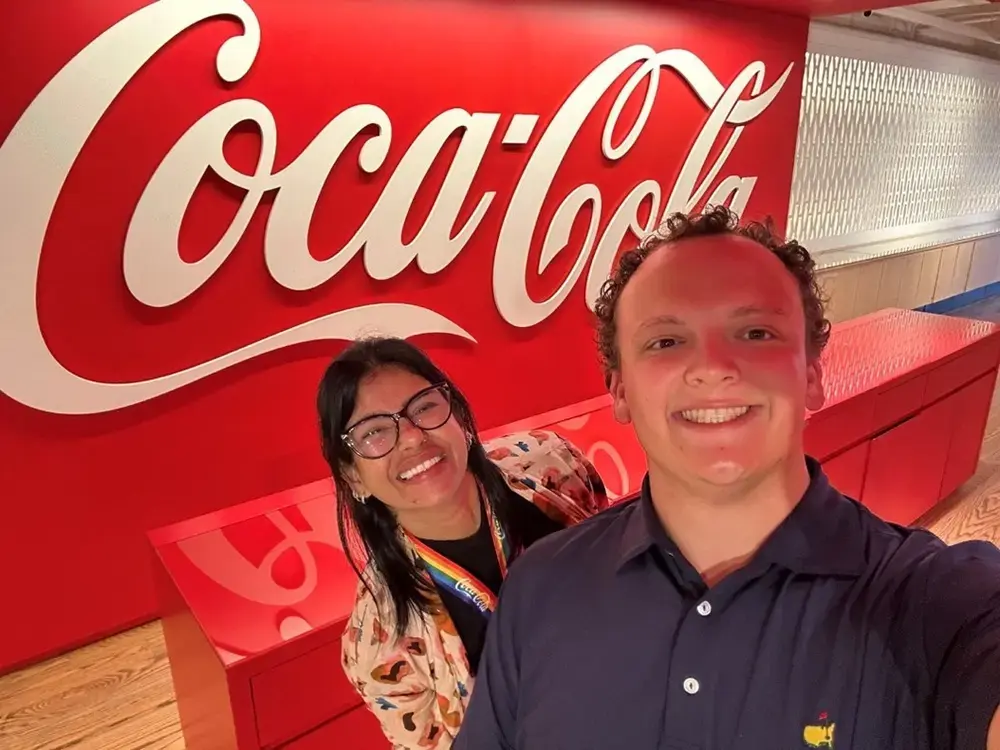
Rori DiFiore: Can you tell us about reconnecting with your Coca-Cola Company experience in Rio?
Lucas San Miguel: My interests are really in Latin American economic development and its importance to U.S. interests. This is what I focused on in my application to CLS—why learning Portuguese, in addition to Spanish, matters, and how my previous Chinese studies related to China’s influence in Latin America in recent years. I had never been to South America prior to CLS Portuguese and I wanted to experience a global company’s perspective in Brazil, the region’s largest economy.
I worked at Coca-Cola for four years in multiple countries. I met people on a global team based in Rio and wanted to learn about Brazilian work culture. I set up meetings, which led to more visits and even presenting on what I do in my job as a Gen Z marketer for Coca-Cola in the United States. I learned about how business operations differ, met with teams on AI and tech implementation to see how developing economies are adjusting to the AI boom and how that differs from how the U.S. is pivoting, and engaged with several other teams.
RD: What differences did you observe in the work culture between South America and the U.S.?
LSM: Coca-Cola’s office setup is similar worldwide, but the day-to-day work environment in Brazil is more flexible — meetings are often scheduled last minute, and dinners are much later in the evening. There is more in-person work and a stronger sense of community. Relationships are built before business is conducted.
In the U.S., Coke is a huge market and distributes to an array of audiences geographically, but they all share the common language of English. In Brazil, the company navigates 12 unique cultural contexts across different countries in South America, in different languages. Products perform very differently. In some countries, Coke Zero is extremely popular and in other countries, it's Matte Leão or another product.
Even the words we use to describe the same product in these different countries varies. In the United States, Coke is tied to "nostalgia"; in Brazil, it’s part of everyday experiences like football games. There, my friends would never go to a soccer game without a Coke in hand — it's more habitual than nostalgic.
RD: Any favorite moments from your visits to the headquarters?
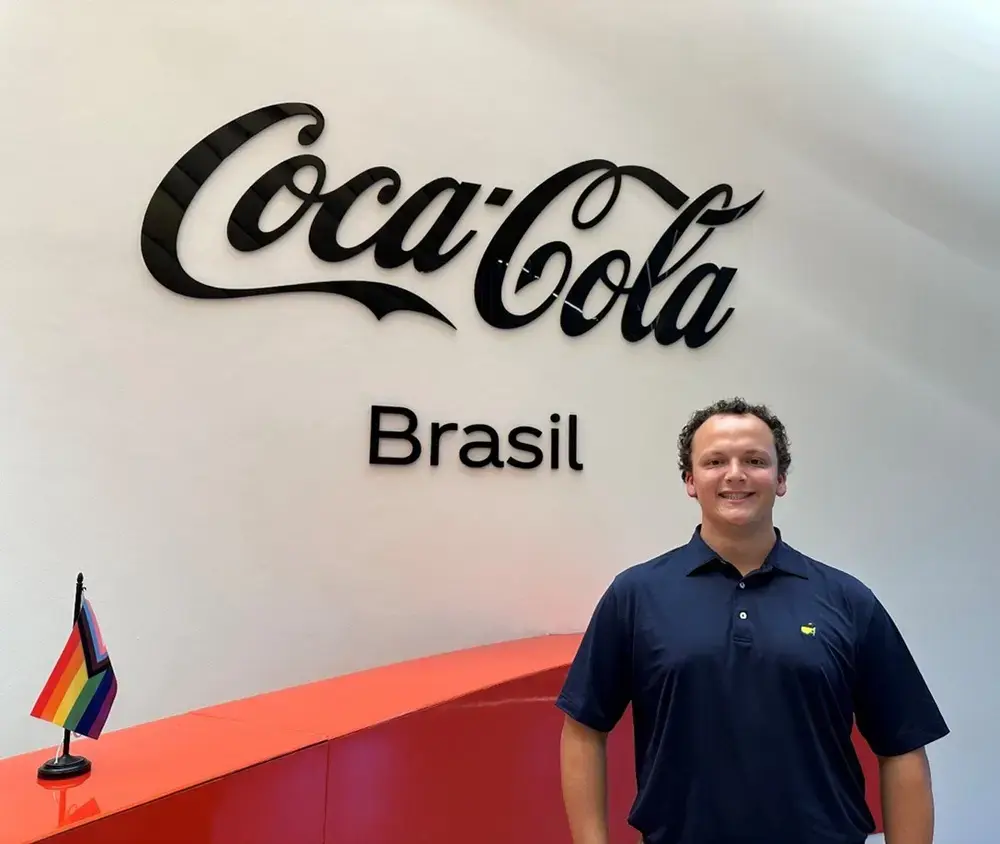
LSM: In Atlanta, our global headquarters had over 5,000 employees. There are a lot of people going through those doors that I didn’t know. In Brazil, even in a big office, everyone seemed to know everyone's name and facts about each other. Relationship-building is central, knowing everybody—from assistants to presidents—is expected.
Connecting with people across the hierarchy perspective felt easier because of the warmth of Brazilian culture. I spoke with many vice presidents and even spent a whole day shadowing a vice president. In the U.S. that would likely be a tough ask. The openness and willingness to teach and explore was both interesting and welcoming.
RD: Why are language skills and cultural competence important in marketing and business?
LSM: With AI translating languages in real time, it might seem like the ability to speak a language is becoming less important.
But in every interaction, I've had in my global professional experiences—Brazil, Thailand, London—people are shocked when they hear me speak their language, especially Chinese. Few people that look like me take that step to dedicating thousands of hours to learning something that is close and important to them. Language is a cornerstone of mutual respect that's built at the beginning of a relationship that can't be communicated in any other way.
In global business, trust is key, and language skills are the first steps in building trust. My language skills helped me gain invitations into a lot of rooms that I wouldn’t have been invited into otherwise. Sometimes I was the only Chinese speaker, and needed to translate for a meeting, or they wanted cultural feedback before they sent a message or gifts to someone in a different country.
Understanding someone’s perspective is much deeper when you speak their language. My ability to fully understand the situation they're in, or interpret what they're saying, is contingent on my ability to fully understand them from the point of view that they can communicate in the language they are most comfortable in.
RD: What would you say to economics or business students about the value of language skills?
LSM: In interviews, if someone sees I speak Chinese, they will often test me. They care less about my answer, but more about how well I reply, especially in pronunciation and confidence. That builds trust even if the job doesn't require Chinese.
One of my favorite parts about being American is the freedom to study whatever you want and then go into whatever career you want. At Emory, we say you go to college to learn how to think, and your subject gives you a different perspective to think from. Learning a critical language gives you an entirely new perspective to think from, an entirely new culture to understand from, and removes you from the cultural context you perhaps grew up in to understand others’ situations.
RD: Did your Chinese language also come into play in Brazil?
LSM: Yes. During the BRICS summit, the presidents and high-ranking officials of all those countries flew to Rio and they shut down the entire city. The Chinese delegation stayed near my host family. I spoke with staff supporting their leadership. There was a noticeable Chinese presence in the neighborhoods, and I enjoyed practicing my language skills with them.
I attended BRICS-related events at PUC, with many Chinese speakers and interpreters, and practiced my language skills there.
There have been many Brazil-China agreements passed in the last year and a half, and BYD, a major Chinese car manufacturer, just moved to Brazil. I've also been meeting a lot more Brazilians that learn Chinese in school, which was interesting.
RD: Anything else about the intersection of Latin America, China and U.S. development that you want to share?
LSM: A few CLS students and I visited the consulate to learn from Cultural Affairs Officer Kaitlin Turck. Her job is to engage with Brazilian entities, organizations, sports teams, you name it. It was really interesting to see how the U.S. engages on a diplomatic level.
My goal is to work in the Foreign Service or development. Seeing diplomats’ day-to-day work was inspiring. They move around every few years, so you get to hear stories about so many different countries and cultures.
RD: What stands out from CLS Portuguese experience in Brazil?
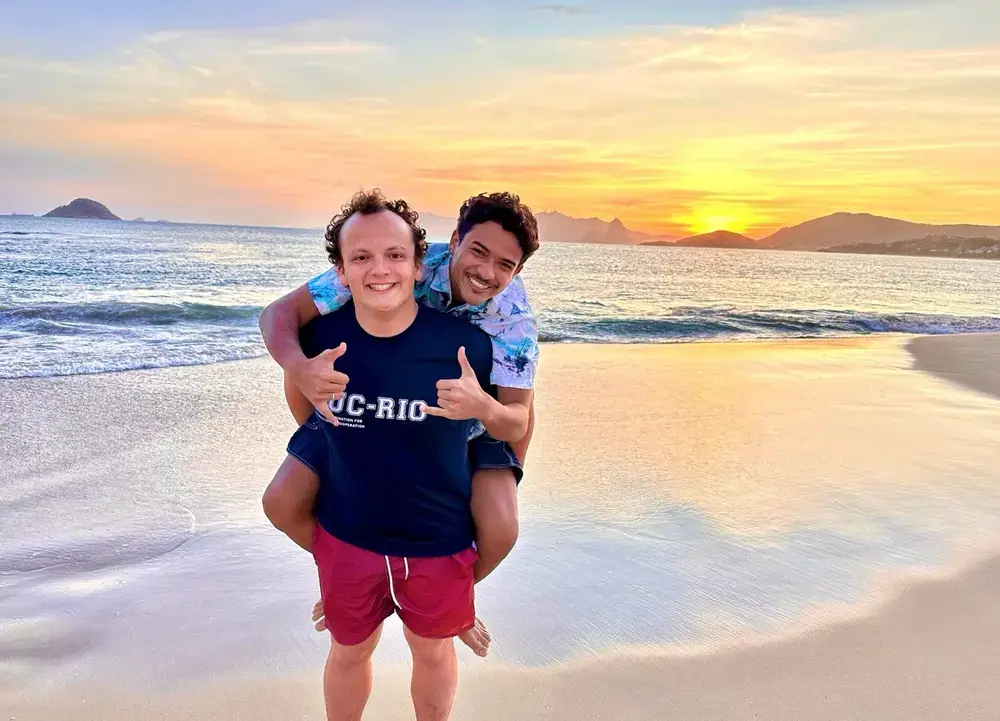
LSM: My language partner was the biggest highlight—he became my closest friend. Having done programs like NSLI-Y and CLS, language partners were always meaningful, but this time I connected very well with him. I can't look back on my memories in Rio without thinking of him because he was there for all of them.
It's exciting because I've been home for two weeks and we've already been texting and calling often. Since he doesn't speak English I'm constantly practicing Portuguese and keeping up the language skills.
The natural beauty of Brazil was another highlight—hiking, scuba diving, and solo trips on weekends to cities nearby Rio. When I'm traveling alone, I put myself in situations where I have to figure out how to get home when I can't call an Uber or look at a map. Those experiences represent some of my most meaningful language practice.
RD: What’s next for you, and how has CLS informed your plans?
LSM: In February, I received the Bobby Jones Scholarship, and will study Global Sustainable Development at St Andrews. My first CLS scholarship for Chinese confirmed my interests in Latin American development; CLS Portuguese enhanced my ability to engage with my career goals.
My thesis and classes focus on Latin America, so my ability to research and connect with primary sources in Portuguese will prove invaluable. Before CLS, my Portuguese skills were limited; now I can communicate with Brazilians at a high level. Because I went out of my way to connect with Coca-Cola, practice presenting formally in Portuguese, and have business conversations, I feel comfortable conducting higher-level research interviews for my master’s research.
I spent my junior year at London School of Economics, researching Cuba and Brazil. My work was hindered by needing translations from Portuguese, which inspired me to apply to CLS. Now I'm excited to continue that research with new skills.
RD: Any advice for CLS applicants?
LSM: Connecting your language learning to a clear career or academic goal. CLS wants to know you’ll continue learning this language after the program.
My cohort’s academic interests were varied. We had med school students wanting to connect with Portuguese-speaking patients and lawyers interested in Brazil-related legal work. Everyone had a specific purpose for their language study.
Also, start early. Essays take longer than you think. Get feedback from friends, family members, or trusted advisors. Talk to an alum. I always do whenever I apply for any program because it's helpful to make sure this is the right experience for me and gain insights about how they were successful in their application.