

CLS Alumni Highlight: Addison Miller
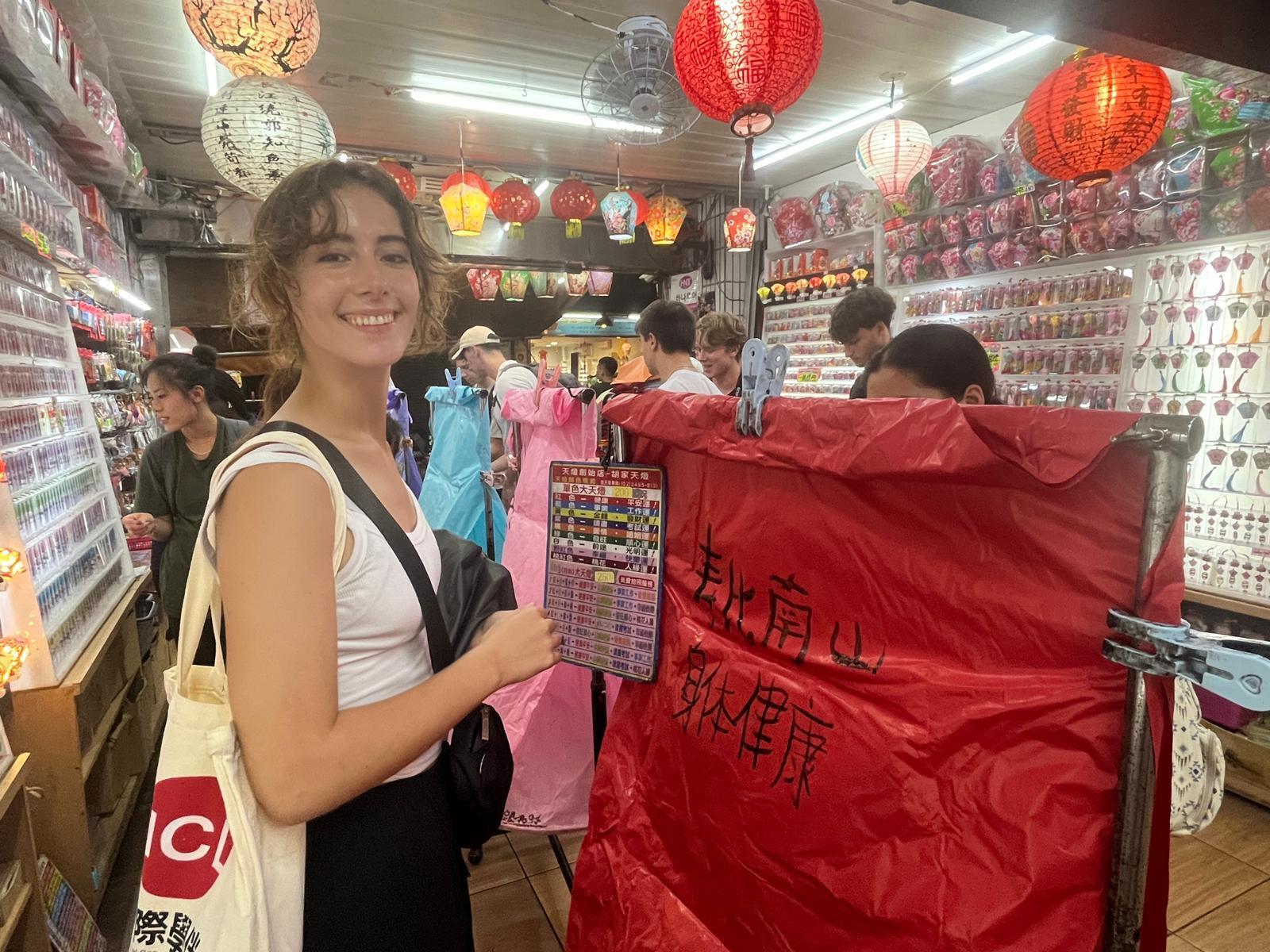
Addison Miller, a 2024 CLS Chinese Program participant in New Taipei City, Taiwan, leveraged her experience to shape her path toward a career in international and comparative education. Her CLS experience played a pivotal role in connecting her academic interests with real-world experience. In 2026, she was selected as a Marshall Scholar. In this interview with Communications Officer Josie Krieger, Addison reflects on how CLS influenced her trajectory, the evolution of her academic work, and the advice she offers to students pursuing similar opportunities.
Josie Krieger: What are your academic interests and how did CLS impact your professional trajectory?
Addison Miller: At the University of Alabama, we have a make-your-own major program called the New College. I created an International and Comparative Education degree, which is a relatively niche area, but CLS was a big part of my journey to this field.
I went on CLS after my sophomore year while I was exploring how to integrate my Chinese into my career. I remember the moment when I pieced everything together. I was walking around the Tamkang University campus when I realized that I was on to something within my research because I'd recently been exploring how education is a geopolitical issue.
Living in Alabama, it's hard to get a concrete visualization of the geopolitical nature of education because domestic issues take a bigger focus. When I was on CLS, I participated in a program known for its promotion of global interconnection. It was a surreal experience to live the educational exchange that I had been studying up to that point.
JK: Can you share more about how CLS shaped your professional trajectory?
AM: CLS acted as a springboard. I was moving in the direction of my current profession, but CLS expedited the process.
From a language perspective, CLS was incredibly beneficial in learning academic writing. I'd been studying Chinese for seven years, but I hadn't had an experience where I'd been able to focus on writing, which was very helpful, both for my research and professionally.
CLS, equally importantly, expanded my network. Beyond a professional sense, it connected me a bunch of people who are also interested in China, all of whom bring different perspectives to the field. I'm still in contact with many of the people from my CLS cohort. We chat with one another and send opportunities around. CLS helped me find different paths that I didn't know existed, and I think that that has helped me negotiate the balance that I want between international relations and education.
JK: Tell me more about the research you are currently conducting.
AM: I'm currently working on a research project using large language models (LLMs) to improve Chinese language access for heritage and foreign language learners in underserved Alabama communities.
We're hoping that our research can both close gaps in access to language education in these underserved rural areas, as well as build out support for language education for more tailored, individualized language learning.
JK: What are your long-term goals, and how do you see language and cultural knowledge shaping your future work?
AM: My long-term goal is to go into academia. I'd like to end up as a professor and eventually start building educational exchange programs and work with policymakers to ensure that support for educational exchange remains a major facet of the American diplomatic strategy.
I believe it is critical to build cross-national relationships, and that the language and cultural background that I gained through CLS will be fundamental for me to build these programs in the future. When I'm the one negotiating with different universities in a professional capacity, building relationships and conducting those discussions in a shared language will build trust and successful partnerships.
CLS really equipped me to get out of my comfort zone. During CLS, in addition to my language classes, I was trying to come up with a way to get involved in the research on English education and AI integration, but I didn’t know where to start.
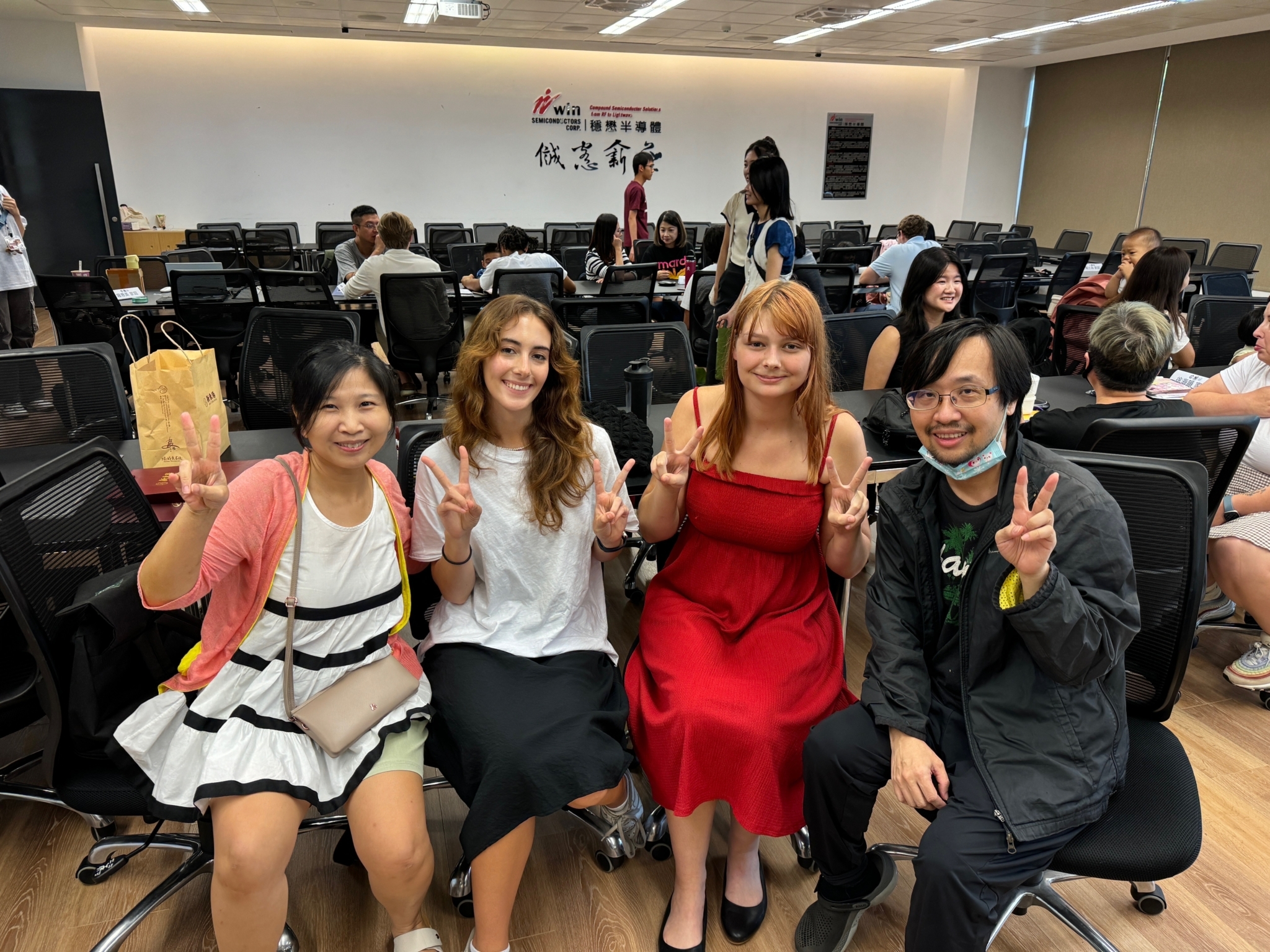
When I mentioned this to my CLS site director, she gave me a crash course in getting connected in Taiwan. With her encouragement, I connected to the Center for Education Research and Innovation. I ended up meeting the director and attending their workshops. These experiences informed my research and the work I do in local Alabama schools. I would not have had the confidence linguistically to take this leap without CLS, especially since it required me to develop a new set of vocabulary to even understand the workshops. This experience led to other professional opportunities, including a semester abroad in Taiwan at a major center for education research the following semester.
JK: What advice would you give CLS participants or alumni who aspire to similar opportunities, including tips on preparing for the application process?
AM: My first piece of advice I would give to anybody who's applying for CLS: apply for this program. Truly, just apply.
I applied for CLS twice. I first applied as a freshman and thought it was an intimidating experience, but once I submitted the application, it felt like an accomplishment itself. Even though I was not accepted my first time applying, the clarity that I got through that application process and self-confidence I gained were fundamental to me applying to CLS again.
The second piece of advice I would give is to really think about why you want to pursue CLS. Why, specifically for you, is this opportunity going to be meaningful? For these awards, as any fellowship advisor will tell you, there are so many people applying that the best thing that you can do for yourself is to think through your motivation and the opportunity honestly and candidly.
JK: What does receiving the Marshall Scholarship mean to you?
AM: Receiving the Marshall Scholarship feels like a validation of the work that I've been doing over the past four years. I went into college wanting to go into education policy, but I'd also been studying Chinese and wanted to incorporate it into my future work. Receiving the Marshall Scholarship validates that I'm on the right path, and I am doing things that are having a positive impact on the world around me.