

Beyond the Lab: The Value of Studying Abroad for STEM Students
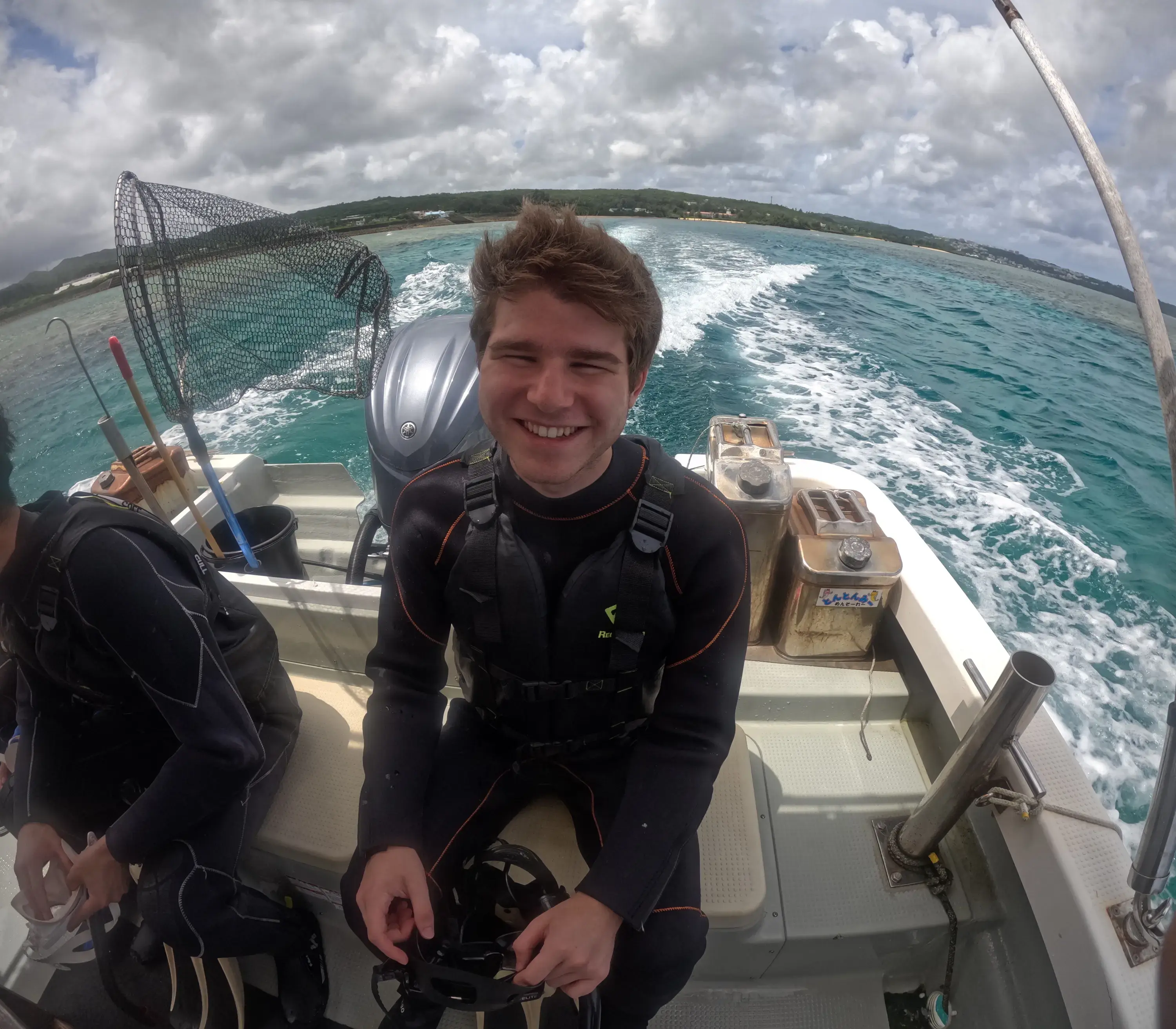
Alex Graber is a Biology major at Vassar College in New York. Alex participated in the 2025 CLS Japanese Program hosted by Okayama University in Okayama, Japan.
This past summer, I participated in the CLS program at Okayama University in Okayama, Japan. I am currently an undergraduate student at Vassar College (class of ’27) studying biology, with a double minor in Japanese and mathematics. I chose to apply for CLS Japanese both out of personal interest and to help me achieve my goal of studying non-human animal communication at top institutions. As a STEM student, I was initially unsure if studying abroad would be a productive use of time and money, but, after my CLS experience, I can confidently say that it could not be more critical.
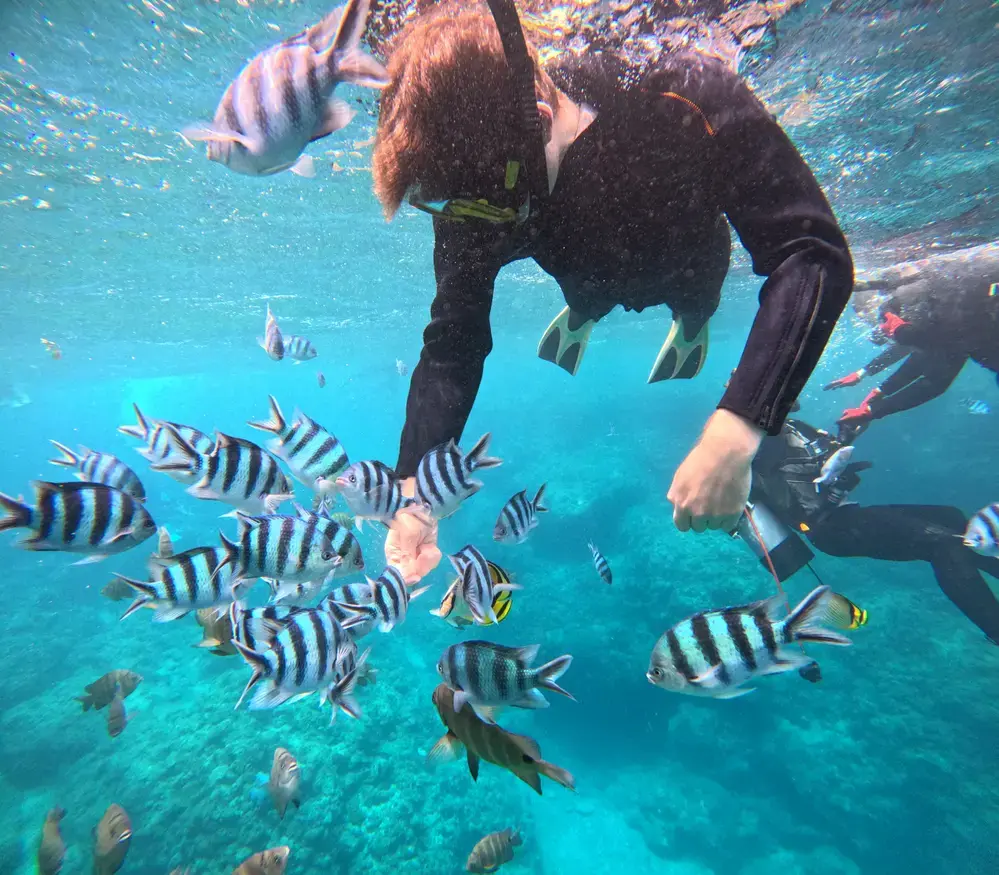
Specifically, one of my main research interests concerns cetacean vocal communication, and one of the hotspots for cetacean research worldwide is on the island of Okinawa. Besides being a beautiful tropical getaway, it is also home to several institutions conducting comprehensive research on a diversity of marine life (The Okinawa Institute of Science and Technology (OIST), the Churaumi Aquarium, and the University of the Ryukyus, just to name a few). So, when I was granted a 3-day independent travel weekend during my CLS experience, I chose to explore some of that research first-hand.
While in Okinawa, I had two main places I wanted to visit: the renowned Churaumi Aquarium and the relatively new OIST. The aquarium was stunning, and I learned about both the processes and results of their extensive marine research, especially in the aquarium’s shark research lab. There, they exhibited not only the results of their decades of research, but also how they achieved those results. In addition, I was able to skim some of their most recent peer-reviewed journal articles (published in both Japanese and English)!
The OIST was no less stunning than the aquarium, despite its lack of marine megafauna. I was able to take a self-guided tour of the facilities, learning about some of the currently ongoing research projects and the internationally collaborative nature of the institute. I was also lucky enough to run into a few students, whom I briefly interviewed about their experiences at the OIST. I gained important information from visiting the campus in-person that will help inform my choices for graduate education.
As important and exciting as my Okinawa trip was, it alone would not have convinced me of the necessity of studying abroad; aquariums and elite institutions can be found all over the world, including in the United States. However, I believe the perspective I gained from the rest of my CLS experience will prove invaluable to my academic and professional career.
Through CLS, I developed the collaboration and communication skills necessary to perform primary research at a high level. Technical skills and a deep understanding of the subject matter are certainly important for mastering a field, but you can’t advance that field without challenging the status quo. And, inherent to challenging the status quo is a rigorous exchange of ideas between individuals who have mastered the field, but approach problems differently. I have lived and studied in New York state my entire life, and it wasn’t until I worked intensively with the other people (both the Americans and the Japanese) in my CLS cohort that I realized how much diversity of thought I had been missing out on. Learning from and with individuals from other cultures is one of the best ways, in my opinion, to practice approaching problems from different angles; that is the true value of CLS to me.
One of my favorite CLS anecdotes demonstrates how my language-learning journey complemented my research interests nicely. At the beginning of the program, I met a Japanese student whom I could barely communicate with; I was able to trade names and discovered we were both interested in biology, but that was the extent of my Japanese ability. Then, on the second-to-last day of the program, I was speaking with this person again and realized they were doing biology research at Okayama University as well. By then, my Japanese skills had improved to the point where we were able to have a full conversation about both of our projects. We found out our niches were not very similar—he was studying protein chemical interactions, and I was studying songbird acoustics—but it was such a fulfilling moment nonetheless. If the limits of my language signify the limits of my world, as Ludwig Wittgenstein once famously said, then the CLS program put a whole new sky on my horizon. I am so grateful to have had this opportunity, and I know it will continue to impact me throughout my entire academic and professional career.